
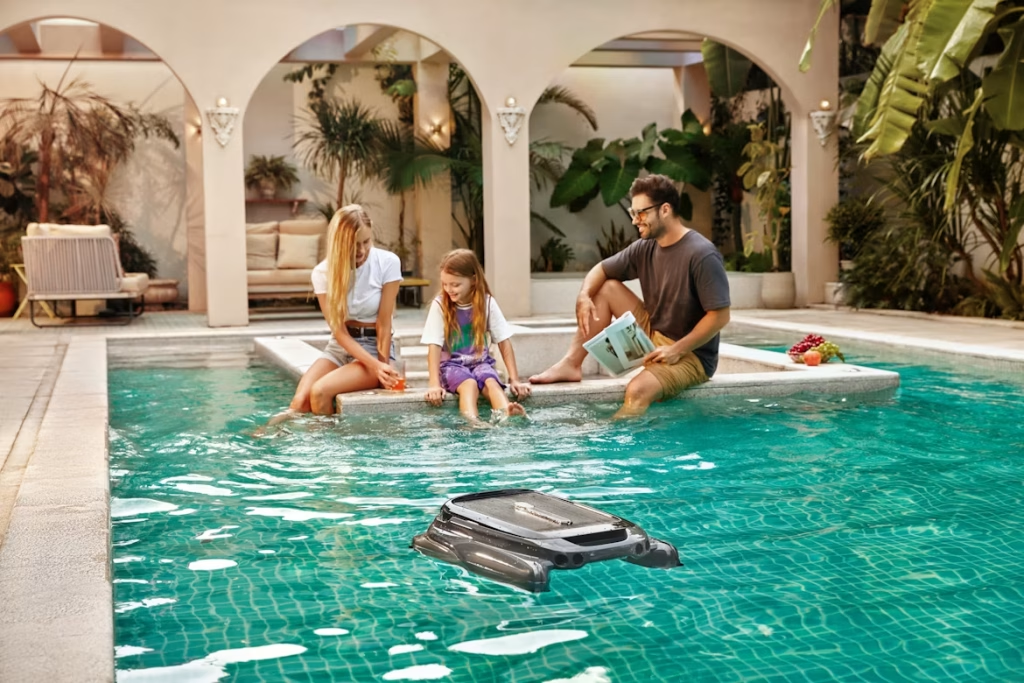
Having a backyard pool is a dream come true for many families. It’s the centerpiece of summer fun, birthday parties, and relaxing afternoons. While skimming leaves and running the vacuum are part of the routine, truly mastering your pool care goes beyond the basics.
When you understand the more advanced parts of keeping your pool in shape, you can make sure it’s not just clean, but healthy, safe, and efficient. This saves you time and money in the long run.
Understanding Water Chemistry
Think of your pool water like a delicate ecosystem. When everything is balanced, it’s sparkling and inviting. When it’s not, things can get frustrating, feeling like a never-ending science experiment. The trick is to understand a few key things beyond just chlorine.
- pH Level: This tells you how acidic or basic your water is. The sweet spot is usually between 7.4 and 7.6. If the pH is too low (acidic), it can irritate skin and eyes, and even corrode your pool equipment. If it’s too high (basic), your chlorine won’t work as well, and your water might get cloudy. You can use a pH increaser (like soda ash) or a pH decreaser (muriatic acid or sodium bisulfate) to get it right.
- Total Alkalinity (TA): This helps keep your pH steady. Without enough TA (ideally 80-120 ppm), your pH can jump all over the place, making it hard to control. If TA is low, add sodium bicarbonate. If it’s high, you can use a pH decreaser to slowly bring it down.
- Calcium Hardness: This measures how much dissolved calcium is in your water. If the water is too “soft” (not enough calcium), it will try to pull calcium from your plaster, grout, and concrete, damaging them over time. If it’s too “hard,” you might get cloudy water and scale buildup on surfaces and equipment. Aim for 200-400 ppm.
- Cyanuric Acid (CYA): This is a stabilizer that protects your chlorine from the sun’s UV rays. Without it, you’d be adding chlorine all the time. But too much CYA can actually make your chlorine less effective. Keeping proper pH and chlorine levels is a constant balancing act, and CYA plays a big part.
Testing your water regularly with a good quality test kit, at least once a week, will help you keep these elements in check and stop problems before they even start.
Recognizing Common Pool Issues
Even with careful testing, you’ll sometimes run into problems. Knowing how to figure out what’s wrong is the next step in advanced pool care. Most issues are pretty obvious: the water just doesn’t look right.
Cloudy water is a common complaint. This murkiness can come from a few things, like high pH, not enough filtration, or a buildup of debris and oils. Always start by checking your water chemistry and getting it balanced. If that doesn’t help, your filter might need a good cleaning or backwashing. Sometimes, a clarifier can help tiny particles stick together so your filter can catch them.
Then there’s the dreaded green water, a sure sign of an algae bloom. This usually happens when chlorine levels drop too low, letting algae grow fast. To fix it, you’ll need to shock the pool with a lot of chlorine, brush the walls and floor really well to loosen the algae, and run your filter constantly. You might also need to use algaecides to prevent it from coming back or to deal with a really bad bloom.
A strong chlorine smell, funny enough, often means you don’t have enough *effective* chlorine. That smell comes from chloramines, which form when chlorine mixes with sweat, oils, and other stuff. The solution is to shock the pool to break down those chloramines and bring your “free chlorine” level back up.
When to Call the Professionals
The DIY spirit is great, but sometimes calling in a professional is the smartest, safest, and most cost-effective move. Knowing your limits is a big part of being a responsible pool owner. If you’ve tried balancing your chemicals and cleaning the filter, but a problem like cloudy water or recurring algae just won’t go away, it’s time for an expert to take a look. A pro can spot hidden issues you might miss, like a sand filter that needs new sand or a cartridge filter that’s past its prime.
Major equipment problems are another clear sign to ask for help. If your pump is making weird noises, your heater won’t turn on, or you suspect pool leaks, don’t try to fix it yourself unless you really know what you’re doing. Pool equipment involves high-pressure water and electricity, which is a combination best left to trained technicians. A professional can quickly and safely figure out the problem, whether it’s something simple like a worn-out seal or a more complicated motor replacement.
Finally, if you’re just feeling overwhelmed, that’s a perfectly good reason to hire someone. A reliable weekly pool service can keep the water balanced, catch small issues early, and make sure routine maintenance is handled consistently. You can still take care of the basics, while a professional manages the more detailed chemistry and equipment checks.
Seasonal Pool Preparation
How you get your pool ready for the different seasons really affects how long it lasts and how much work you have to do. Doing your opening and closing procedures the right way protects your investment and makes your life much easier.
When spring rolls around and it’s time to open the pool, start by getting rid of any water and debris from your winter cover before you take it off. This stops a big mess from falling into your clean water. Next, put your drain plugs, skimmer baskets, and any other equipment you took out for winter back in. Add water until it’s halfway up the skimmer opening. Once it’s full, turn on your filtration system and let it run for at least 24 hours. This is also when you should test your water and start balancing your chemistry, which will probably need a good shock treatment to get things going.
Closing the pool for winter, or “winterizing,” is even more important, especially if you live somewhere with freezing temperatures. The main goal is to keep ice from damaging your pool’s surfaces, pipes, and equipment. This means lowering the water level below the skimmer, using a blower to get all the water out of the lines, and adding winterizing chemicals to stop algae from growing. Finally, you’ll put on a tight-fitting winter or safety cover. A good closing in the fall means a much smoother opening in the spring.
Energy Efficiency for Your Pool
Your pool can use a lot of energy, but a few smart choices can really cut down on your utility bills. The pump is the heart of your pool’s circulation system, and it also uses the most energy. Older single-speed pumps run at full power all the time, which is often more than you need.
Upgrading to one of the modern energy-efficient pool pumps can save you a lot of money. These variable-speed models let you run the pump at a much slower speed for most of the day, using just enough power to circulate and filter the water well. You can then speed it up for shorter times when you need to vacuum or use a water feature. Many homeowners find that these pumps pay for themselves in just a couple of seasons.
Besides the pump, there are other ways to save.
- Use a Solar Cover: A simple solar cover can reduce water evaporation by up to 95% and significantly lower heating costs by trapping the sun’s warmth. It also means you won’t need to add as many chemicals.
- Run the Pump at Night: Check with your electricity company about off-peak hours. Running your pump when electricity rates are lower can make a noticeable difference.
- Automate Your System: Timers and smart controllers can help you set up your pump and heater schedules perfectly, making sure they only run when they absolutely have to.
Taking these advanced steps not only keeps your pool in perfect shape but also makes it a more sustainable and affordable part of your home. You’ll spend less time fixing problems and more time making memories.
Discover more from Momtastic Mommy Blog
Subscribe to get the latest posts sent to your email.

2 thoughts on “Beyond the Basics: Advanced Pool Care for Homeowners”